Simon Communities of Ireland has published two policy briefs drawing on the project’s Problem Phase in Ireland: one on digital integration and data coordination, the other on the national definition of homelessness. Over recent months, the partner has also brought COMHOM’s findings to the media, parliamentarians, its national conference and a public data exhibition.
Simon Communities of Ireland works to prevent and address homelessness through research, advocacy and its work with local Simon Communities. The briefs examine two issues raised by service providers during the research: difficulties with disconnected digital systems, and concerns about how homelessness is defined and recorded.
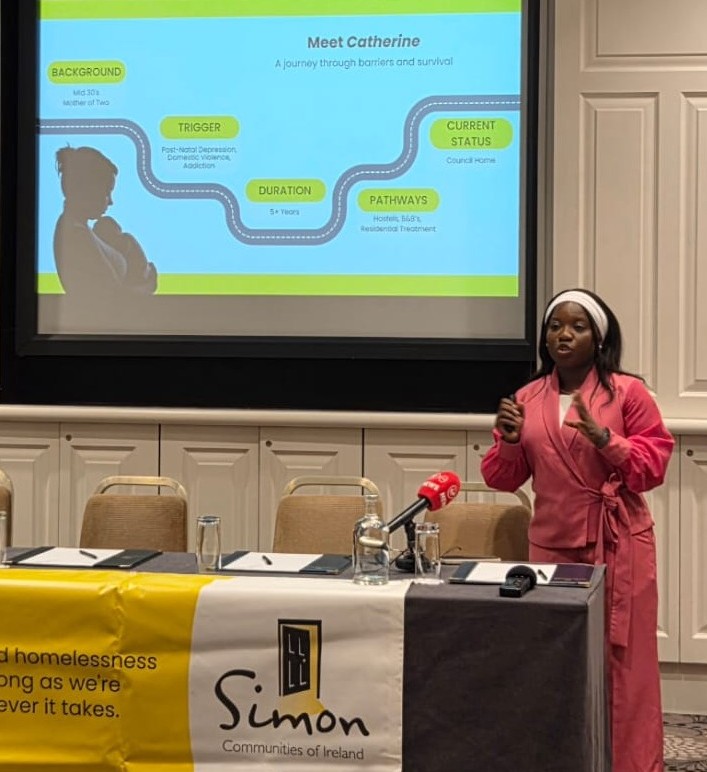
COMHOM Policy Brief 1: Strengthening Ireland’s Response to Homelessness: The Case for Improving Digital Integration and Data Coordination in Ireland
The first brief looks at how digital tools are used in practice by homelessness services. Providers widely use the national Pathway Accommodation and Support System (PASS) alongside their own case management (CRM) platforms, but these systems remain fragmented and poorly connected. The result is duplicated data entry, inconsistent monitoring and evaluation practices, and limited ability to track outcomes. Providers also point to gaps in digital training and IT support.
The brief recommends, among other measures:
- investing in an integrated digital infrastructure with a “single point of data entry”;
- strengthening GDPR-aligned data governance and information sharing between agencies;
- developing a national monitoring and evaluation framework, and giving the sector access to aggregated, comparative data.
Read the full brief here.
COMHOM Policy Brief 2: The Case for Reviewing Ireland’s National Definition of Homelessness
The second brief examines whether the definition of homelessness in the Housing Act 1988 reflects what services see every day. Providers describe homelessness as a continuum of housing instability that goes well beyond rough sleeping and emergency accommodation. Hidden forms such as couch surfing, temporary stays with family or friends, overcrowding and insecure tenure are not sufficiently captured in official definitions and figures, and some groups, including Travellers, migrants, young adults and people in temporary or refugee accommodation, are particularly affected.
The brief calls for a formal review of the national definition, carried out with local authorities, service providers and people with lived experience. It also recommends aligning it, where appropriate, with the European Typology of Homelessness and Housing Exclusion (ETHOS and ETHOS Light) and expanding national reporting beyond emergency accommodation data.
Read the full brief here.
Bringing COMHOM findings to the public debate
Simon Communities of Ireland has shared the Irish COMHOM findings through several events and publications.
- Media and parliamentarians. The Irish COMHOM case study report was presented to media representatives and Members of the Irish Parliament at Simon’s live reaction to the March 2026 homelessness figures, linking the project’s findings to the national debate on homelessness data.
- National Simon Conference. During Simon Week, on 24 September, the case study report and two policy briefs were showcased at the National Simon Conference, bringing the project’s evidence to practitioners, partners and supporters across the Simon network.
- Open access publication. The policy briefs have been published on publicpolicy.ie, the platform hosted by University College Dublin, making them accessible to researchers, policymakers and the wider public.
- Data Stories exhibition. The policy briefs were also submitted to the Data Stories exhibition, held from 16 to 24 October 2026, which brings data and storytelling together.
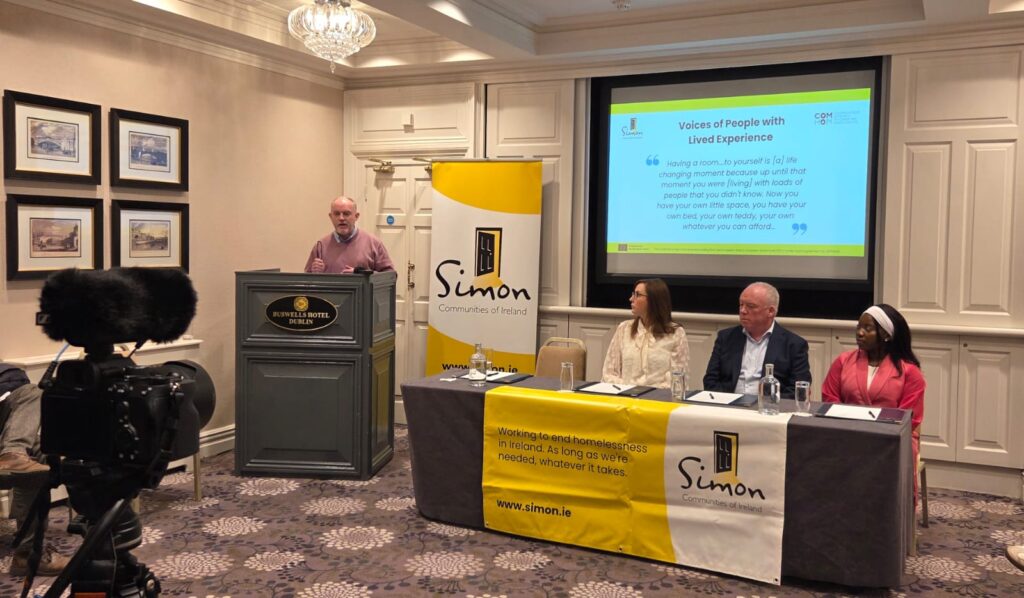
These publications highlight gaps in how homelessness is recorded and understood in Ireland, supporting COMHOM’s aim of improving the quality and comparability of data used to inform services and policy. Definitions that better reflect people’s experiences, alongside more consistent data collection, can strengthen monitoring and evaluation and guide decisions about prevention, service planning and resources.
For more information, you can contact the researcher, Dr Kenny Ogunjemilusi, at kenny.ogunjemilusi@simoncommunity.com.
The COMHOM project has received funding from the European Union’s European Social Fund Plus (ESF+) under Grant Agreement No. 101172624. The views and opinions expressed in the brief are those of the author only and do not necessarily reflect those of the European Union or the European Commission.