In June 2026, the COMHOM project contributed to two important European policy discussions on homelessness, presenting its progress and early lessons to policymakers, researchers and experts working to strengthen evidence-based approaches across Europe. Through its participation in the European Platform on Combating Homelessness (EPOCH) and the Indicators Sub-group (ISG) of the Social Protection Committee, the project shared its experience in developing common monitoring and evaluation practices to support homelessness services in their digital transformation.
Sharing COMHOM’s experience at the EPOCH
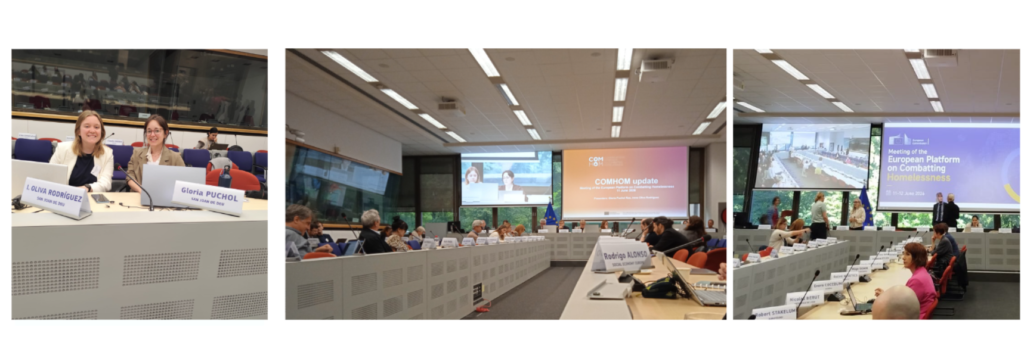
The COMHOM project participated in the latest meeting of the EPOCH, held in Brussels on 11 and 12 June 2026. Established by the European Commission as part of the European Pillar of Social Rights Action Plan, EPOCH brings together policymakers, public authorities, researchers, service providers, civil society organisations and people with lived experience to exchange knowledge and promote evidence-based strategies to end homelessness across Europe.
During the meeting, Irene Oliva Rodríguez (SJD Serveis Socials Barcelona) and Gloria Puchol Ros (SJD Valencia) represented the COMHOM Consortium by presenting the project’s progress to date and the lessons learned during the first stages of implementation. The presentation followed the project’s journey from its initial challenges to the milestones achieved so far, while outlining the next steps towards pilot implementation.
The presentation highlighted the strong response to COMHOM’s sub-granting call, demonstrating the willingness of homelessness service providers across Europe to strengthen their digital capacities and adopt data-driven approaches. It also showcased the work undertaken to establish the COMHOM Pilot, including the development of the Monitoring and Evaluation Framework, the support structures for participating organisations and the first visual concepts for the project’s digital platform.
Particular attention was given to the complexity of supporting more than twenty organisations operating in different welfare systems, with varying levels of digital maturity, organisational structures, service models and data protection requirements. As part of the pilot work, COMHOM has used mapping activities with each participating organisation to build a detailed understanding of their starting points. This has helped the Consortium tailor support, identify specific needs and develop implementation roadmaps leading to the first system integrations later this year.
The discussions generated considerable interest in the project’s ambition to collect longitudinal data capable of generating evidence on individual pathways out of homelessness and supporting comparisons across programmes, organisations and regions. Participants also recognised the complexity of building a common digital infrastructure while supporting organisational and cultural change within homelessness services.
Presenting COMHOM to the Indicators Sub-group of the Social Protection Committee
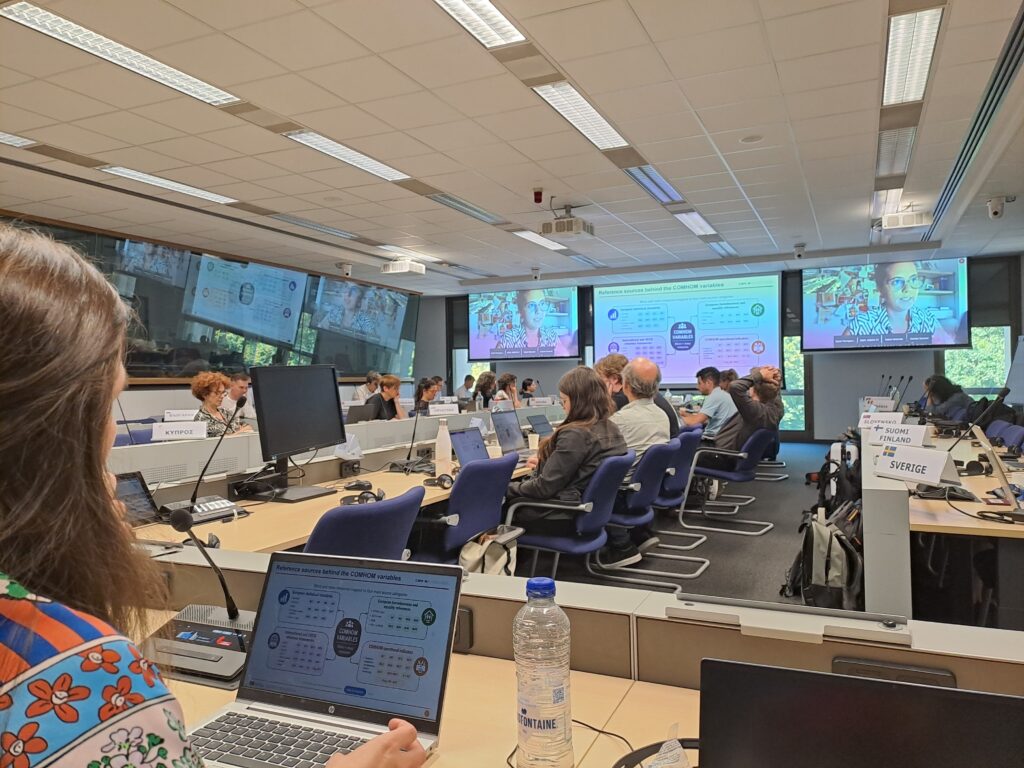
On 18 June 2026, COMHOM was also invited to present its work at the meeting of the Indicators Sub-group (ISG) of the Social Protection Committee. The ISG brings together national experts from all EU Member States and representatives of the European Commission to support the development of common indicators and evidence for social protection, social inclusion, pensions, health and long-term care policies.
The presentation was delivered by Carlota Saumell (FSJD-CERCA) and Maite Arrondo (SJD Valencia).
Building on the messages previously shared at EPOCH, the presentation provided a more detailed overview of the project’s Monitoring and Evaluation Framework, including the standards informing the design of the microvariables used for data collection. The speakers explained how COMHOM is developing a common methodology that enables participating organisations to generate comparable, high-quality data while recognising the diversity of homelessness services across Europe.
The presentation formed part of a session showcasing initiatives supported through the European Platform on Combating Homelessness, alongside presentations from KU Leuven on the European Homelessness Counts project and the Organisation for Economic Co-operation and Development (OECD) on monitoring and evaluating homelessness and housing exclusion strategies.
The discussion reflected a strong interest in COMHOM’s approach to generating longitudinal evidence and supporting data comparability across countries and programmes. Participants also highlighted the project’s contribution in demonstrating the organisational and technical challenges involved in introducing common monitoring systems within diverse service settings.
Looking ahead
The participation in both meetings demonstrated the growing relevance of COMHOM within European discussions on homelessness, digital transformation and evidence-based policymaking. As the project progresses towards the first pilot integrations, the knowledge generated through collaboration with participating organisations will continue to inform both implementation and future policy discussions.
By contributing practical experience from the implementation of a common monitoring and evaluation framework across diverse organisational and national contexts, COMHOM is helping advance conversations on how high-quality, comparable data can strengthen homelessness services and support more effective policies across Europe.
The COMHOM project has received funding from the European Union’s European Social Fund Plus (ESF+) under Grant Agreement No. 101172624.